Oil Mafia Tried to Stop Us for 5 Years — Dangote Opens Up on Battles Behind Africa’s Largest Refinery
From Land Disputes and Sabotage Claims to Building a Private Port, Aliko Dangote Reveals the Extraordinary Struggles Behind His $20 Billion Mega Refinery
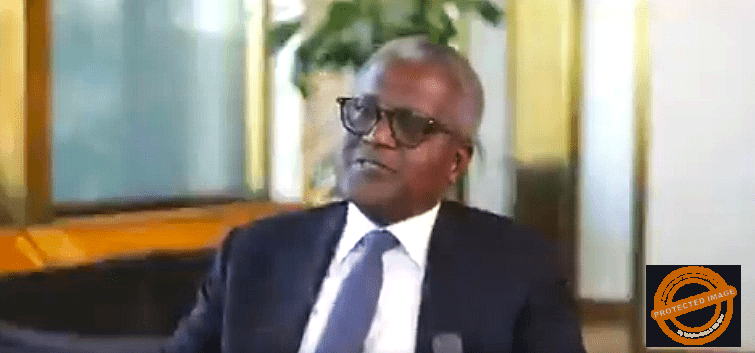
Africa’s richest businessman, Aliko Dangote, has revealed the intense obstacles and powerful opposition he faced while building the $20 billion Dangote Refinery, now recognized as the world’s largest single-train refinery.
Speaking about the massive undertaking, Dangote disclosed that what was initially envisioned as a transformative industrial project for Nigeria quickly became a prolonged battle against entrenched interests he described as an “oil mafia.”
“We launched the refinery in 2013, and for five years we had issues with the land. Everything was being blocked by the oil mafia,” Dangote said.
Located in the Lekki Free Zone near Lagos, the refinery currently operates at a refining capacity of 650,000 barrels per day and has positioned Nigeria as a net exporter of refined petroleum products for the first time in decades.
According to Dangote, the resistance encountered during the project forced the company to practically build an industrial ecosystem from scratch.
Unable to depend on Nigeria’s existing infrastructure, the Dangote Group constructed its own deep-sea port and harbour capable of receiving oversized industrial equipment that conventional Nigerian ports could not handle.
The company also developed major road networks and a massive water treatment facility with a production capacity of 440 million litres per day, spread across more than 30 hectares.
The sheer scale of construction stunned industry observers.
Project engineers reportedly dredged over 65 million cubic metres of sand to prepare the site, while construction activities at peak periods employed as many as 67,000 workers simultaneously, making it one of the largest industrial construction efforts ever undertaken in Africa.
Despite the years of delays, logistical setbacks, and alleged sabotage attempts, the refinery is now widely viewed as one of the most ambitious private-sector investments on the continent.
Economic analysts believe the project could permanently reshape Nigeria’s energy sector by drastically reducing dependence on imported fuel, stabilizing domestic supply, and boosting foreign exchange earnings through exports.
The International Monetary Fund projects that the refinery could contribute as much as 1.5% growth to Nigeria’s non-oil GDP by 2026.
Dangote’s revelations have triggered widespread reactions across social media, where many Nigerians praised his persistence and described the refinery as a symbol of African industrialization and self-reliance.
Supporters credited Dangote’s leadership style, attention to detail, and long-term vision for overcoming years of political, financial, and operational hurdles.
However, some economic experts and policy analysts have cautioned about the potential risks of market dominance, noting Dangote Group’s already significant influence in sectors such as cement, sugar, and flour production.
Critics argue that while the refinery may strengthen Nigeria’s economy, regulators must ensure healthy competition within the downstream petroleum sector.
Still, for many Nigerians, the refinery represents a historic turning point in the country’s quest for energy independence and industrial growth.
Industry stakeholders believe the facility could create thousands of direct and indirect jobs, reduce fuel scarcity, improve local refining capacity, and transform Nigeria into a major petroleum export hub in Africa.
More details from Dangote’s full remarks are expected to emerge in the coming days as discussions continue around the long-term impact of the refinery on Nigeria’s economy and global energy market.

 Shola Akinyele
122 Views
Shola Akinyele
122 Views












 WhatsApp us