
 Shola Akinyele
Follow
X
Follow
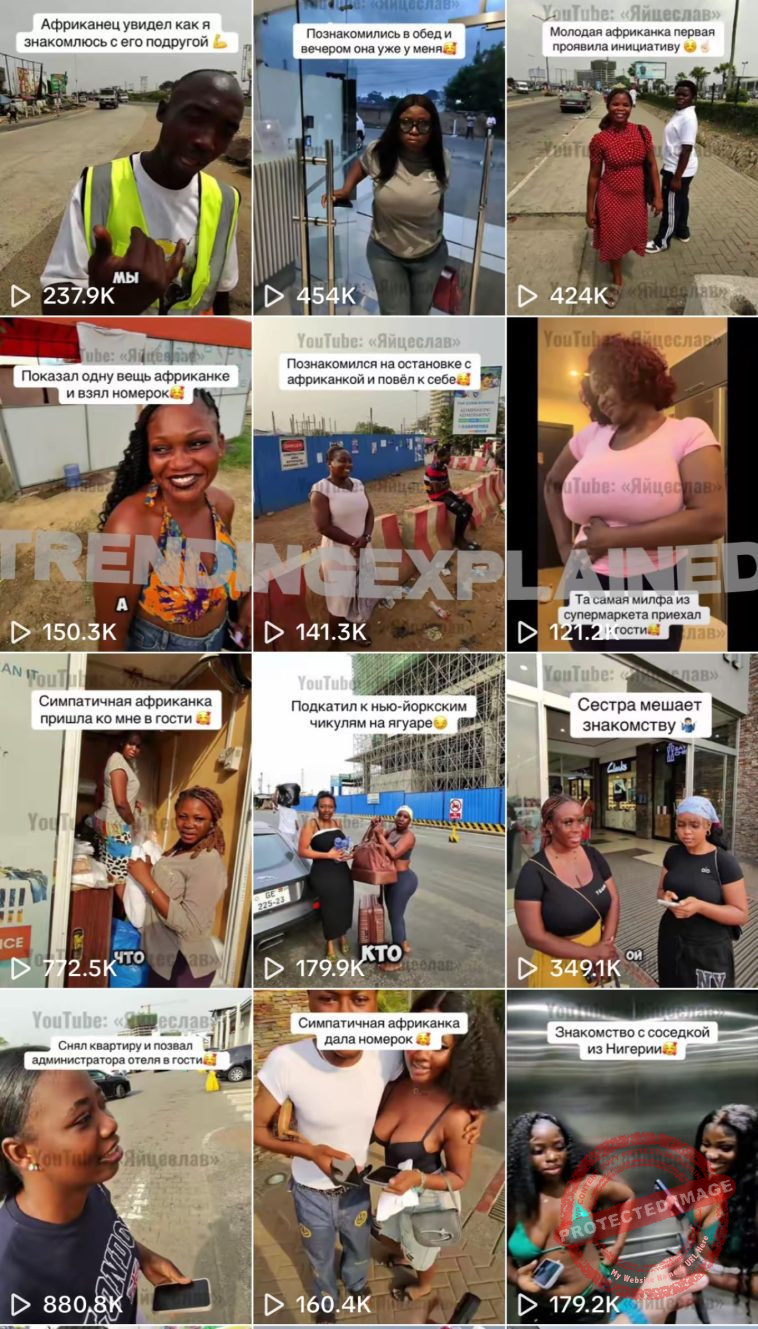
A major digital privacy controversy has erupted in Ghana after a foreign content creator was accused of secretly recording women in public spaces, allegedly monetizing the footage online, and leaving the country before the scandal gained widespread attention.
The man, identified on social media as Yaytseslav or Vyacheslav Trahov and believed to be of Russian origin, reportedly posted dozens of videos showing interactions with women in locations such as shopping malls, hotel lobbies, supermarkets, and busy streets in Accra. Critics allege the encounters were filmed using hidden recording devices without the knowledge or consent of the women involved.
Some of the clips allegedly progressed from casual public conversations to more private settings, including hotel rooms. Viral screenshots circulating online suggest that viewers were charged a small fee to access extended or explicit versions of the content on external platforms. These monetization claims have not yet been independently verified.
The controversy has sparked nationwide debate on consent, privacy rights, and digital exploitation. Civil society groups and legal commentators argue that, if proven, the actions could violate provisions of Ghana’s Cybersecurity Act 2020, which criminalizes the non-consensual distribution of intimate images and related digital offenses.
Women’s rights advocates have called on the Ghana Police Service and the Cyber Crime Unit to launch a thorough investigation, identify the suspect’s whereabouts, and work with international partners if necessary. Advocacy groups are also demanding urgent steps to remove the videos from circulation and protect the identities and safety of those featured.
Online reaction has been sharply divided. While some social media users criticized the women appearing in the videos, gender rights activists have strongly rejected victim-blaming narratives, emphasizing that consent to conversation does not equal consent to recording or public distribution.
Hashtags such as #ConsentIsNonNegotiable, #PrivacyViolation, and #GhanaWomenMatter have trended across X (formerly Twitter), TikTok, Instagram, and WhatsApp groups, reflecting widespread public concern. Influencers and commentators have pointed to broader issues including digital safety awareness, exploitation by foreign content creators, and the growing risks posed by hidden-camera technology in the age of viral monetization.















 WhatsApp us
Comments